A Classroom, a Clean Street, a Helping Hand: The City Behind the Numbers
Contributed by: Takeshi Miyaoka on Sunday, September 27 2026
Last modified on Sunday, September 27 2026
DEVELOPMENT SNAPSHOT #37
What would you build next: a stronger army, or a city where people can feel secure? Today we step into three research illustrations—a classroom, a street, and a moment of care.
A desk where discovery begins
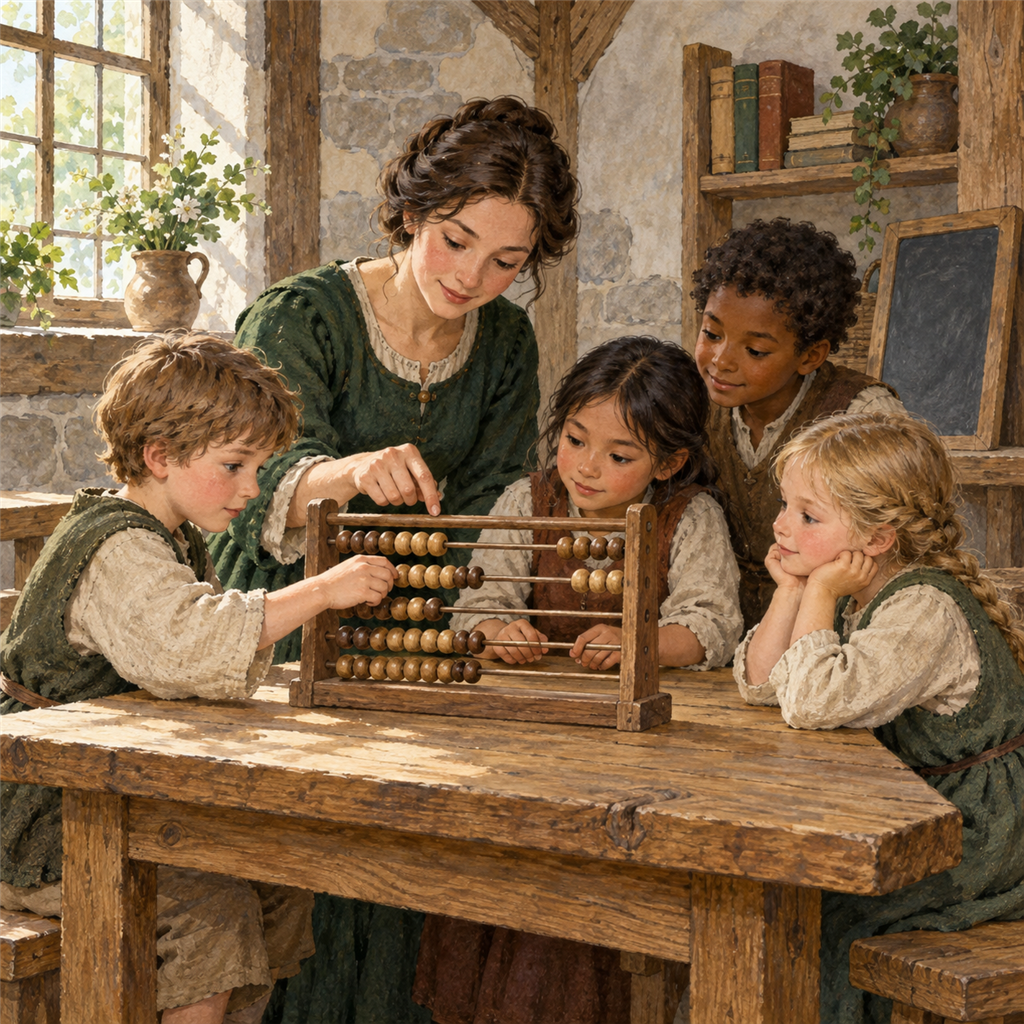
A finger moves a wooden bead. Another child leans closer. It is a tiny discovery, invisible on a vast map. The picture invites a thought: a nation’s future can begin at a desk as well as on a throne.
The current research catalog defines public education as access to education budgets and public training policies. Vocational education lists it as a prerequisite. From a place to learn to the skills of a trade, even a connection in the data can suggest a story.
A morning without a hero
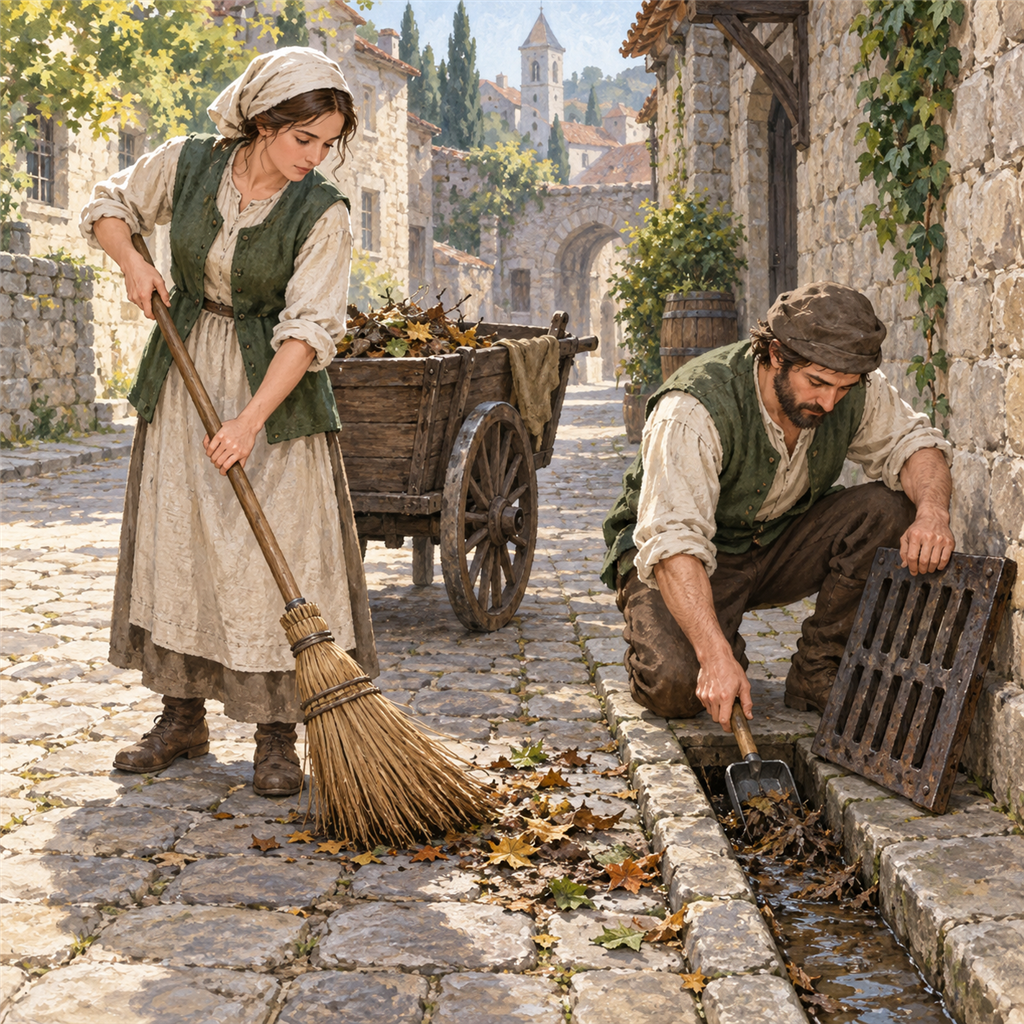
Sweeping paving stones. Clearing leaves from a drain. No spectacular victory, just people doing the work that lets tomorrow’s city carry on. That quiet activity gives this image its warmth.
The public sanitation entry grants access to policies for improving environmental hygiene. In the initial data, it also precedes medical care and epidemic prevention. One piece of research lays groundwork for another kind of preparation.
The coins beside the bandage
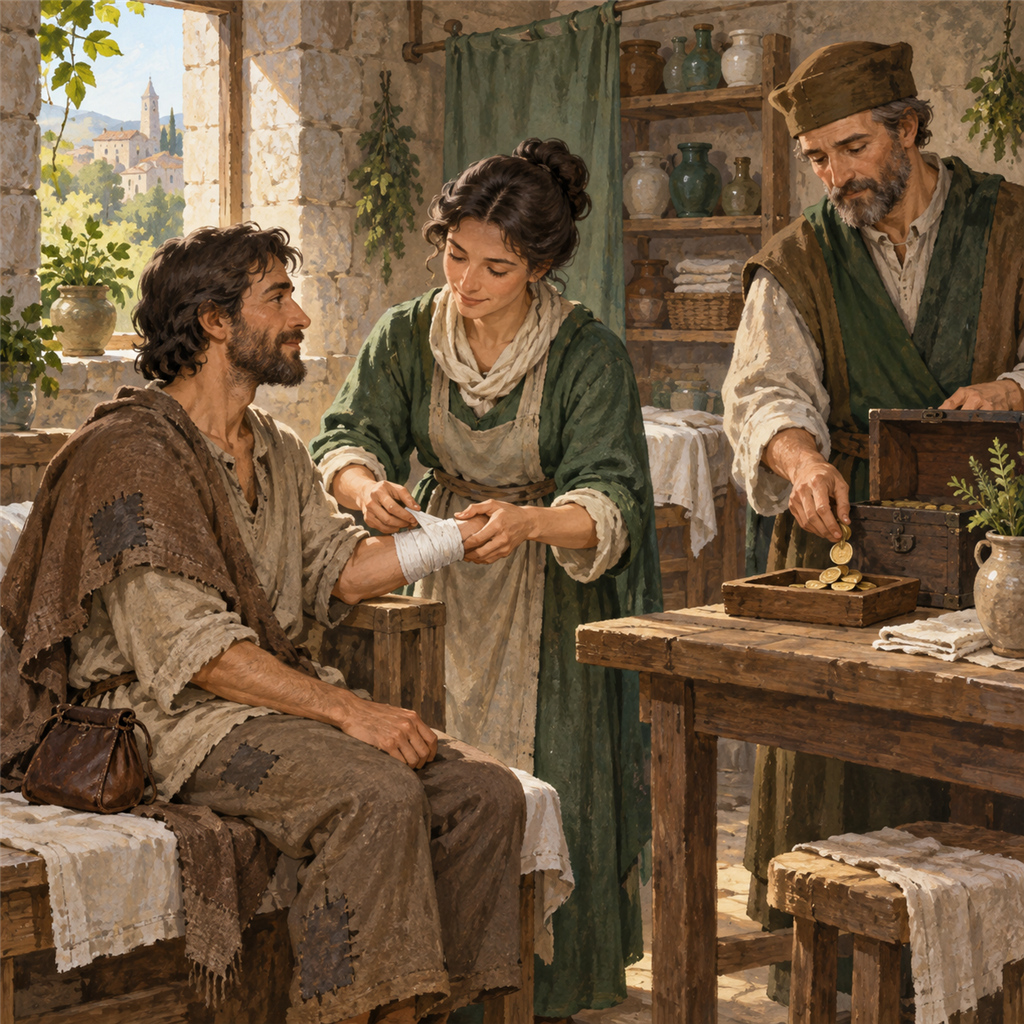
Look beyond the hands tending the injury. Coins and a box occupy the right side of the image. Their presence introduces another question: who helps cover the cost of care?
The current catalog describes this policy as medical-cost assistance for people on low incomes. The idea behind the illustration is not simply adding another building. It is a system that supports everyday life.
What lies inside your borders?
These are three actual illustrations used by the game’s research system, presented alongside current research definitions. They are not walkable street scenes or event footage. Policy effects and balance remain in development; selecting research does not mean that the pictured scene plays out as an event.
There is pleasure in expanding a map—and in imagining the lives within it. What kind of morning would you want your people to wake up to?