Metal That Mends? From a Relic Fragment to Self-Repairing Armor
Contributed by: Takeshi Miyaoka on Monday, September 28 2026
Last modified on Monday, September 28 2026
DEVELOPMENT SNAPSHOT #39
Pale threads reach across a crack in metal. Today we explore an unusual research path: a frame, layered armor, and self-repair. Three illustrations offer a glimpse of old-world technology.
What if a crack is not the end?
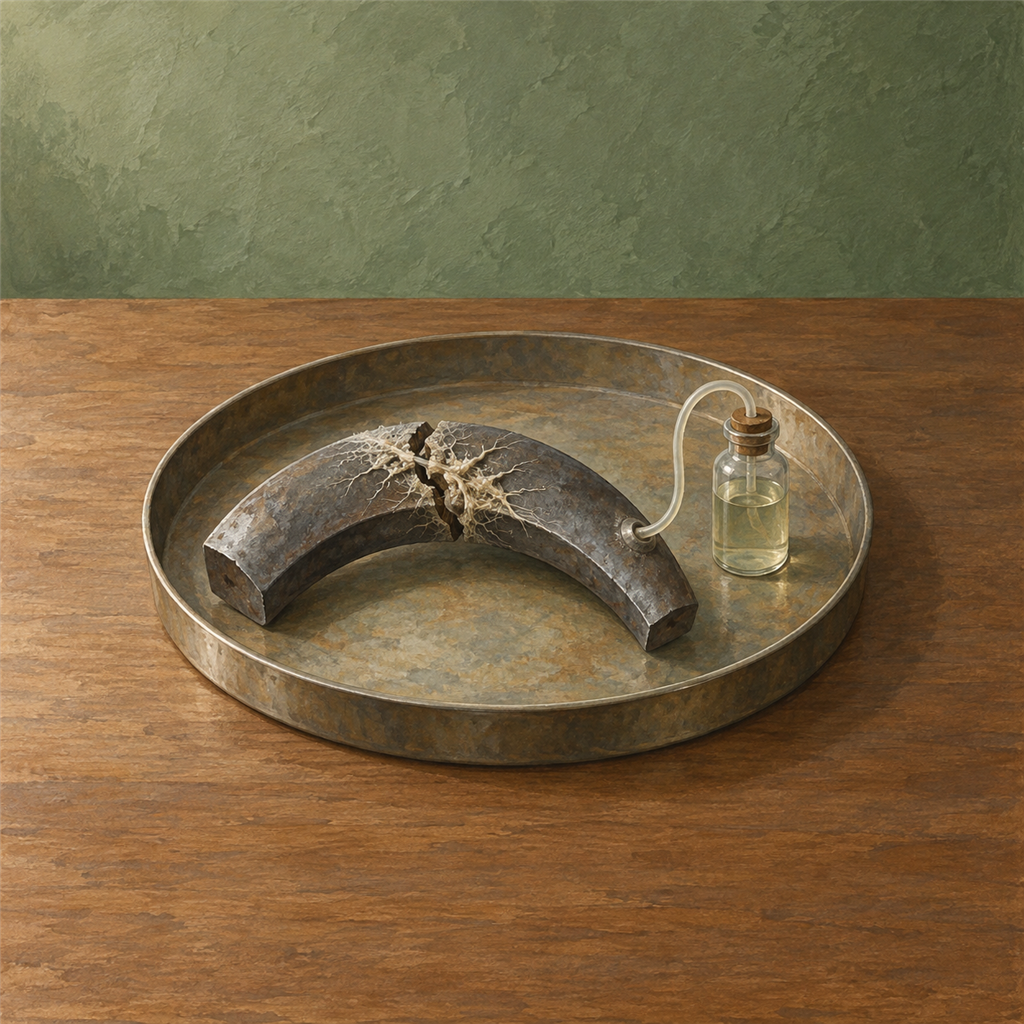
Root-like white threads reach across broken metal. Something about this hard armor feels almost alive. Imagine finding a fragment in a ruin—and realizing that it might still be trying to mend itself.
The current research description presents self-repairing biometal as an attempt to recreate armor used on the old civilization’s lunar shuttles. But the path does not start with the miracle. It starts with a frame.
Measuring a lost shape
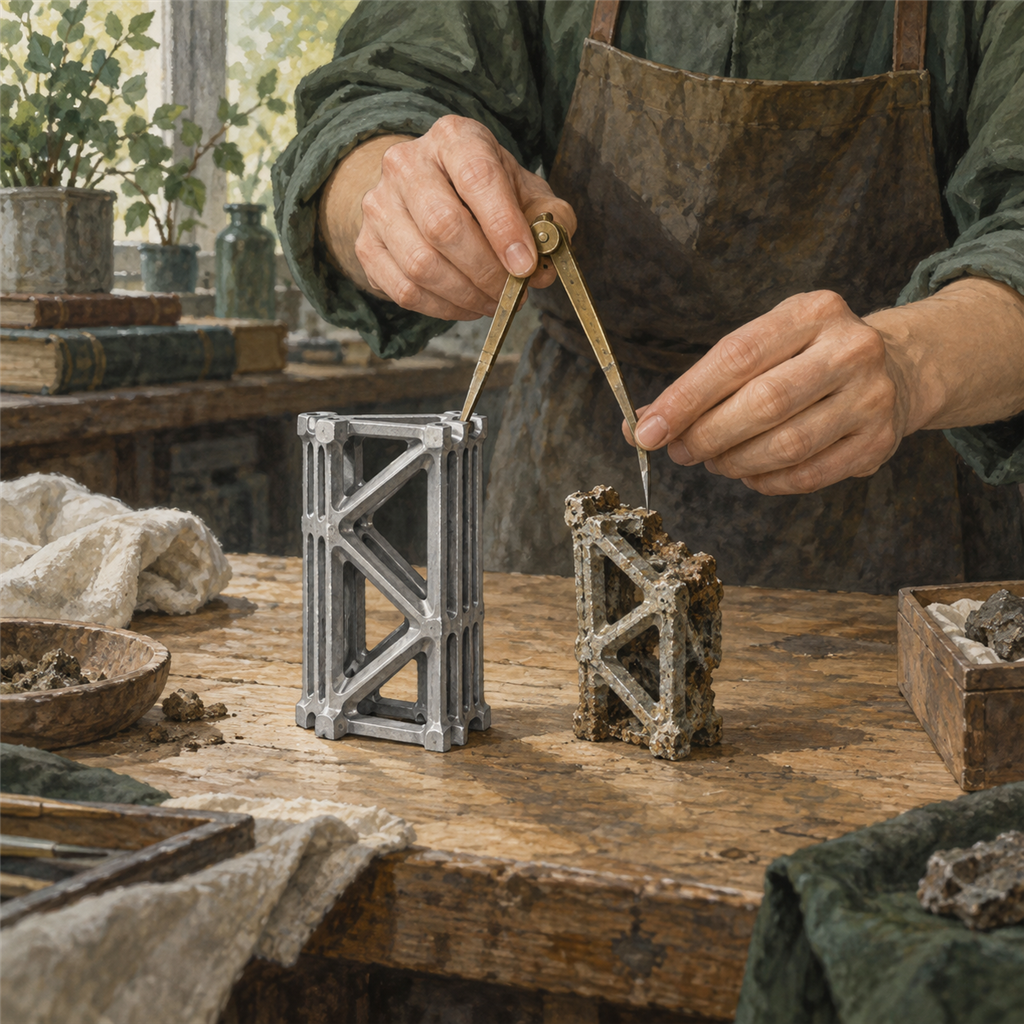
Two parts share a similar shape. One is worn; the other has a crisp silver outline. Between them sits a measuring tool, not a spectacular flash of light. The picture suggests patient work: how did people once build this?
The first research stage is titanium superalloy, described as analyzing old-world materials science to reproduce its structural framework.
Strength comes in layers
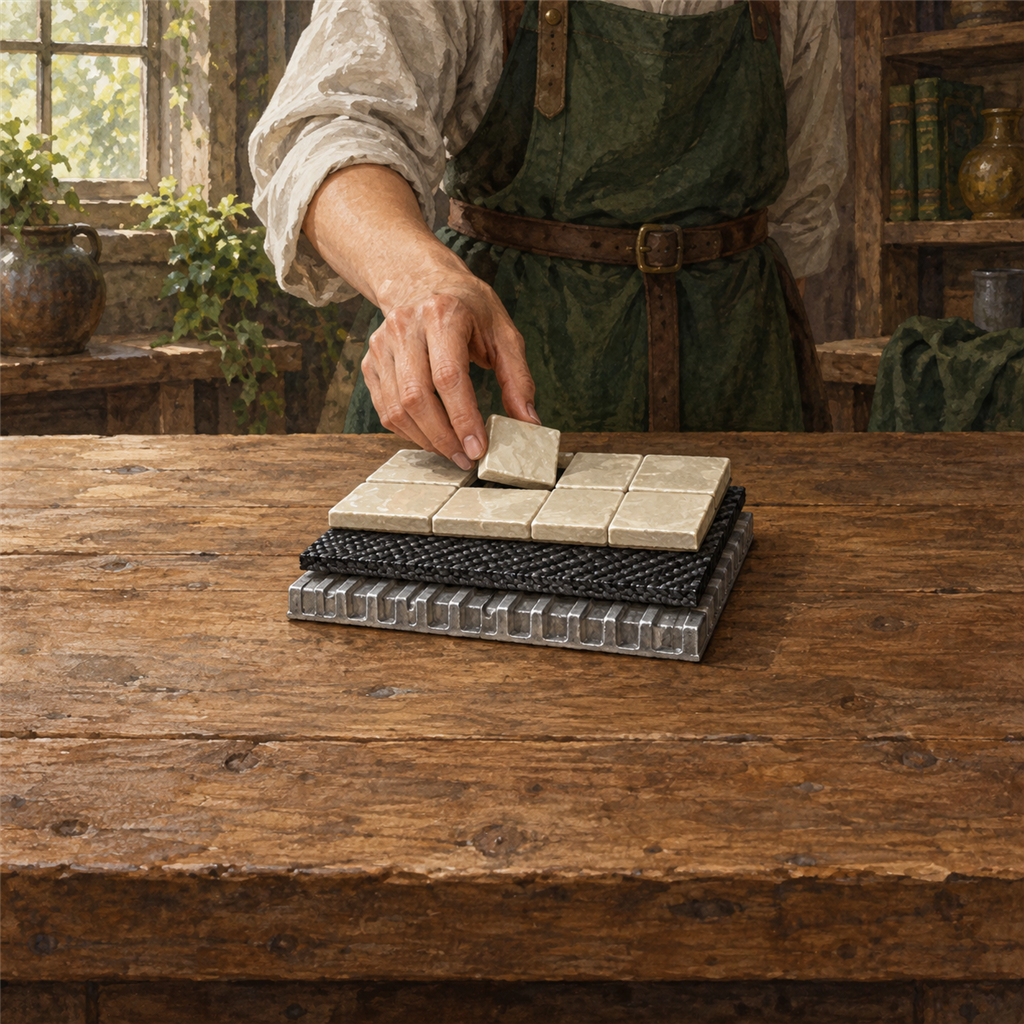
Pale tiles rest on a dark, woven-looking layer, with metal underneath. Those contrasting textures make the word armor feel less like a single slab and more like a set of carefully combined ideas.
The next stage, ceramic-carbon composite armor, combines the alloy framework with ceramics and carbon nanomaterials. It is the prerequisite for self-repairing biometal, where bioengineering joins the material system.
Self-repair still has conditions
In the current implementation, completing research does not automatically upgrade every item in storage. Adoption into a supported variant and the relevant deployment and maintenance conditions matter. It cannot repair without materials or bring completely lost equipment back into existence.
Not magic that makes something unbreakable, but technology for keeping it in service. That distinction suggests interesting choices about caring for equipment. Effects and balance remain in development.
These are actual research illustrations from the game, not repair-animation footage or crafting-minigame screens. What would you want to build from a fragment like this?