DEVELOPMENT SNAPSHOT #61 — Different Harvests Under the Same Disaster: When Crop Failure Meets Insects
Contributed by: Takeshi Miyaoka on Wednesday, October 21 2026
Last modified on Wednesday, October 21 2026
How much remains when crop failure and an insect invasion hit farmland producing 100? Adding the damage percentages is not the answer. This time we look past the disaster names and follow the small multiplication that connects severity, facility type and harvests.
Crop failure does not reduce every harvest alike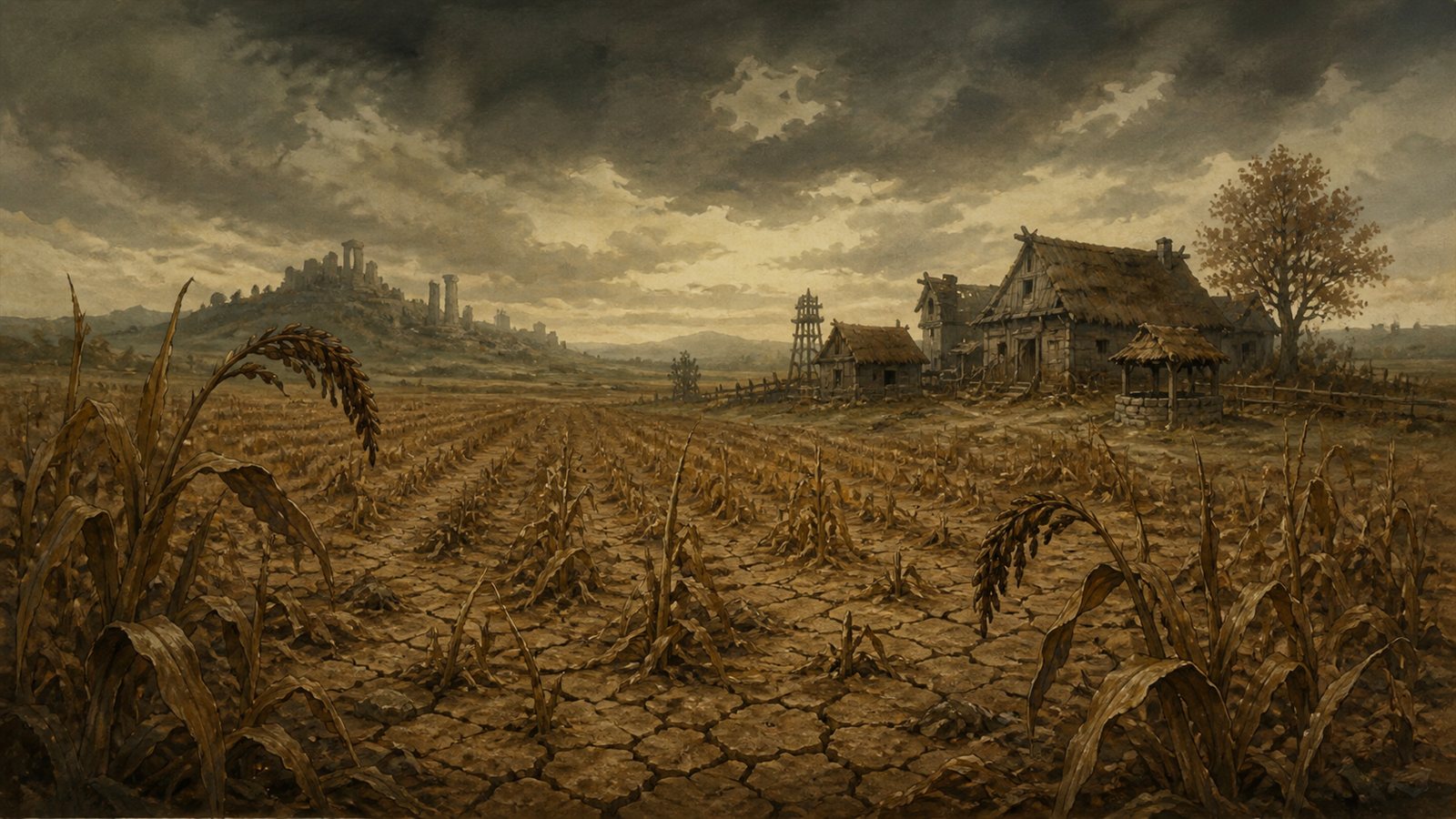
The game's Crop Failure event artwork. All three images here are text-free game assets, not screenshots of an active event or recorded damage.
In the current development data, crop failure has production-reduction coefficients of 0.65 for farmland, 0.45 for orchards and 0.20 for ranches. The calculation multiplies that coefficient by event severity, then subtracts the result from one.
At severity 0.5, farmland gets a multiplier of 1−0.65×0.5=0.675. Keeping every other condition unchanged, a baseline output of 100 becomes 67.5. An orchard would produce 77.5, and a ranch 90. These are worked examples of the formula, not harvests measured in a particular saved game.
When insects arrive, the remaining output is multiplied again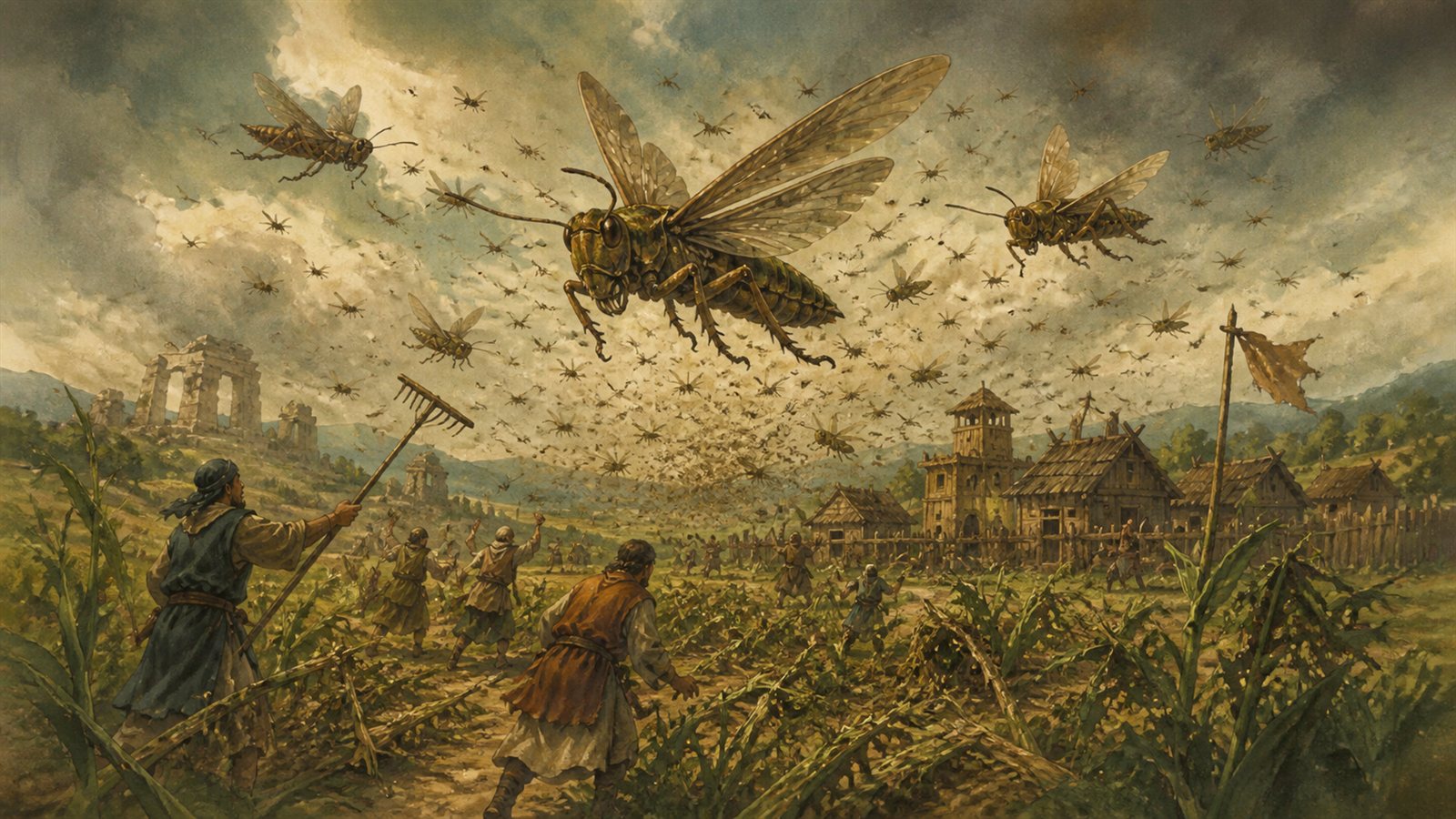
Insect Invasion artwork. This event has effects beyond agricultural production.
The invasion's production-reduction coefficients are 0.70 for farmland and orchards, and 0.30 for ranches. At the same severity of 0.5, their production multipliers are 0.65, 0.65 and 0.85.
If crop failure and an invasion overlap in the same region, the matching multipliers are multiplied, not added. For farmland, 0.675×0.65=0.43875: a baseline of 100 becomes 43.875. It is not a calculation that adds reductions of 32.5% and 35% and leaves 32.5.
| Facility | Crop failure | Invasion | Both |
|---|---|---|---|
| Farmland | 67.5 | 65 | 43.875 |
| Orchard | 77.5 | 65 | 50.375 |
| Ranch | 90 | 85 | 76.5 |
Examples with severity 0.5 for each event and a pre-disaster output of 100 for each facility. These are calculation values, separate from any display rounding.
A picture of fire does not imply the same formula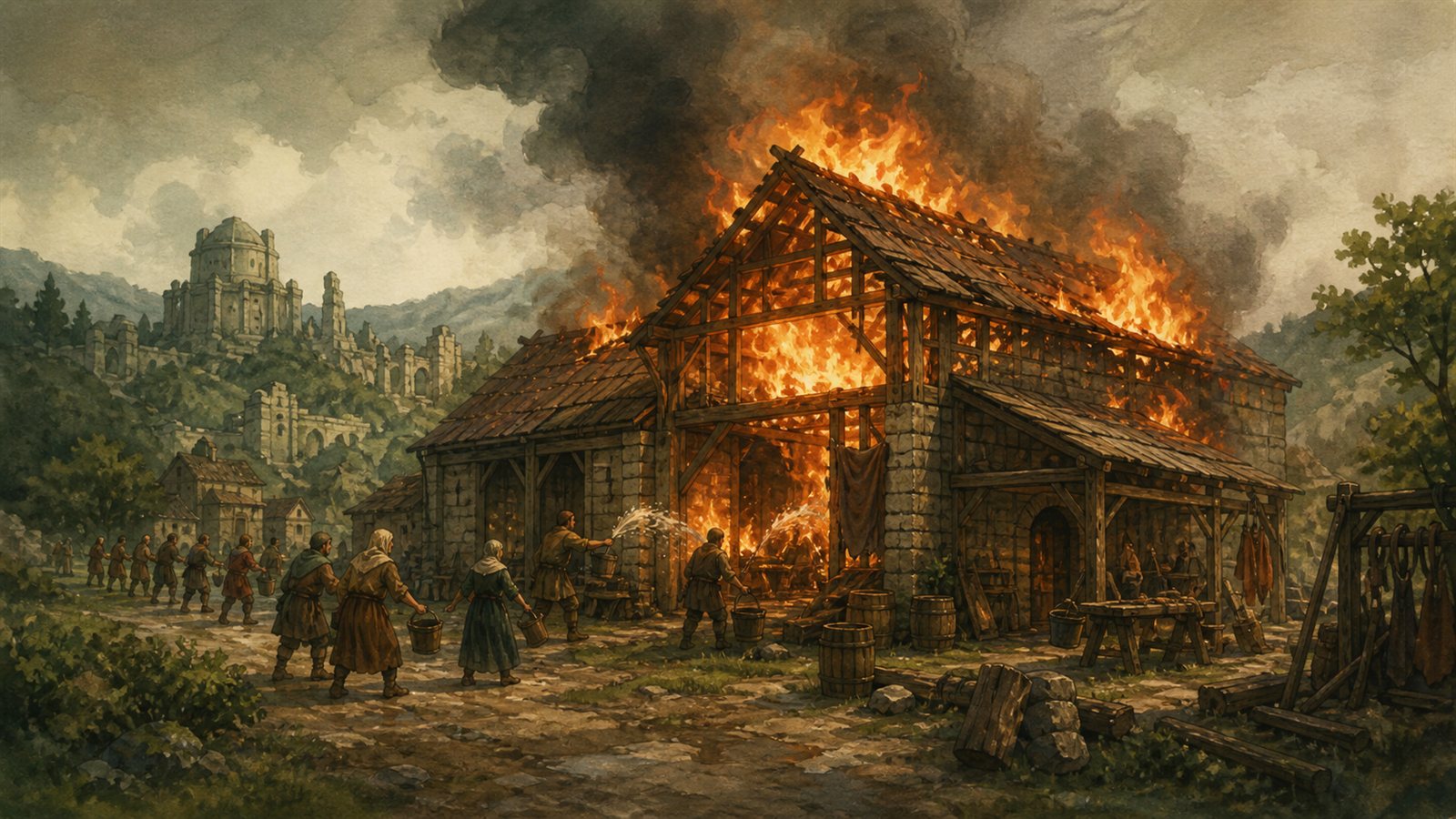
Fire event artwork. The drama in an illustration and the configured production multiplier are different things.
The current Fire event definition has no daily production-multiplier effect like those above. In this particular multiplier calculation, fire alone therefore does not lower the value. That does not mean fire is harmless: its definition includes a separate population-loss effect.
Instead of assigning one generic production penalty to every disaster name, the implementation distinguishes the affected target, effect type and application timing. Country and regional production calculations call the multiplier service, which matches the event's region and facility type. These examples do not apply the penalty to unrelated regions.
Make the reason for a smaller harvest readableThe coefficients remain development tuning values. This article describes calculations present in the current data and implementation; it is not an announcement that a new disaster system or comparison screen was added today.
One presentation improvement worth exploring is to show which event contributed which multiplier beside the final production figure. That is a proposal, not an implemented screen being demonstrated here. Being able to trace a smaller harvest back to its causes could make decisions about reserves and suppliers feel more grounded.
For the atmosphere of all five disasters, revisit Snapshot #12. For differences between the resources you store, see #60 on warehouse space.
Visit the downloads page for currently available releases and development information.