
DEVELOPMENT SNAPSHOT #60 — The Same 100, a Different Warehouse: Wheat, Wine, and Ore
- Tuesday, October 20 2026
- Contributed by: Takeshi Miyaoka
- Views: 24
If a warehouse has 100 capacity left, can it store 100 resources? In Ashwind Chronicle, that depends on the resource. Sacks of wheat, wine with a cool-storage profile, and ore with a dust-separation allowance place different demands on space. Today we look at the small storage factors behind that difference.
Wheat: 100 units, 60.5 occupied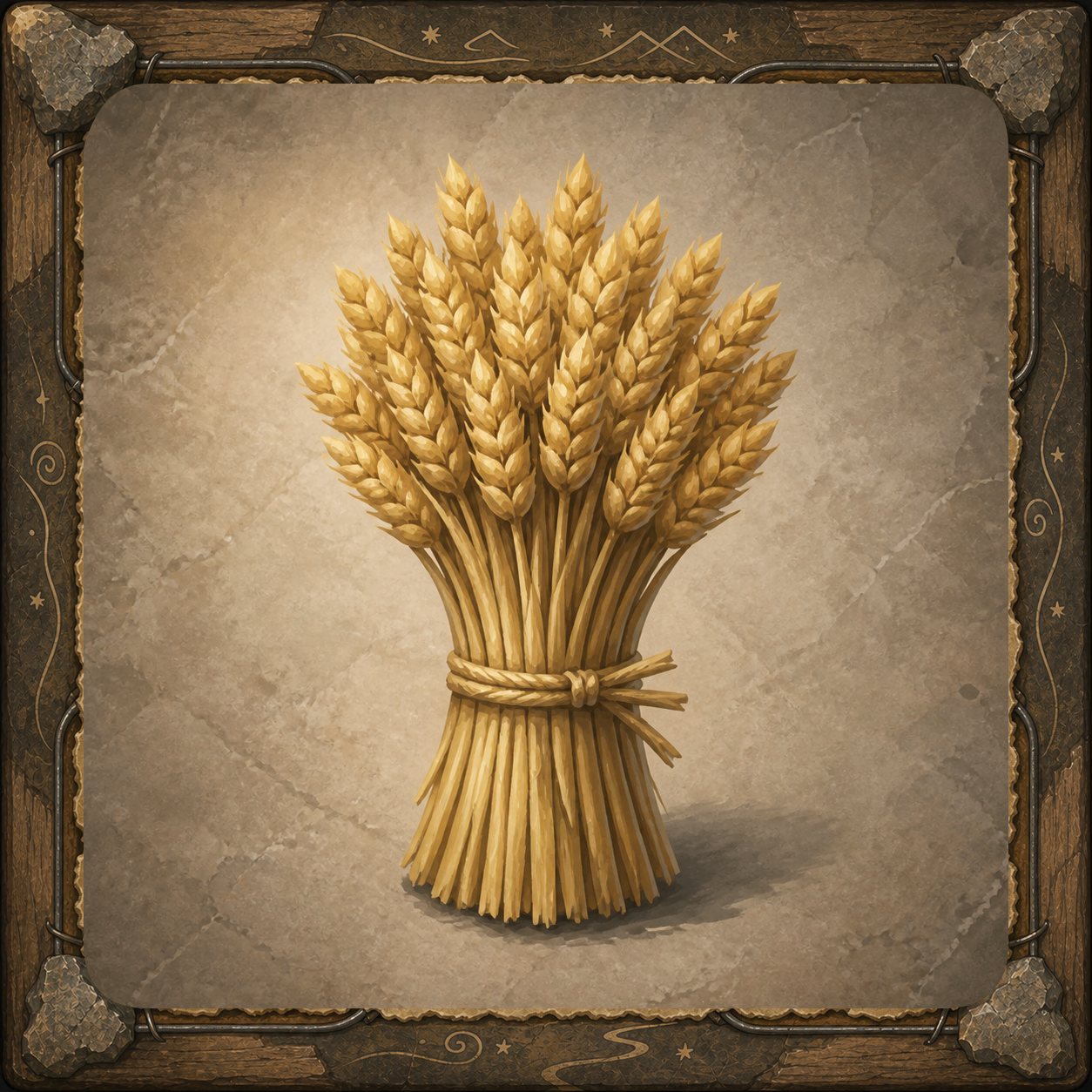
The game's wheat resource card. All three illustrations are existing, text-free game assets, not screenshots of a warehouse interface.
In the current development data, one unit of wheat uses 0.605 storage capacity: a sack factor of 0.55 multiplied by a food-separation factor of 1.10. A quantity of 100 therefore occupies 60.5.
These are relative game-capacity units, not weight or measured cubic metres. Instead of making every resource consume one identical slot, the model gives different storage requirements a numerical footprint.
Wine needs room around the container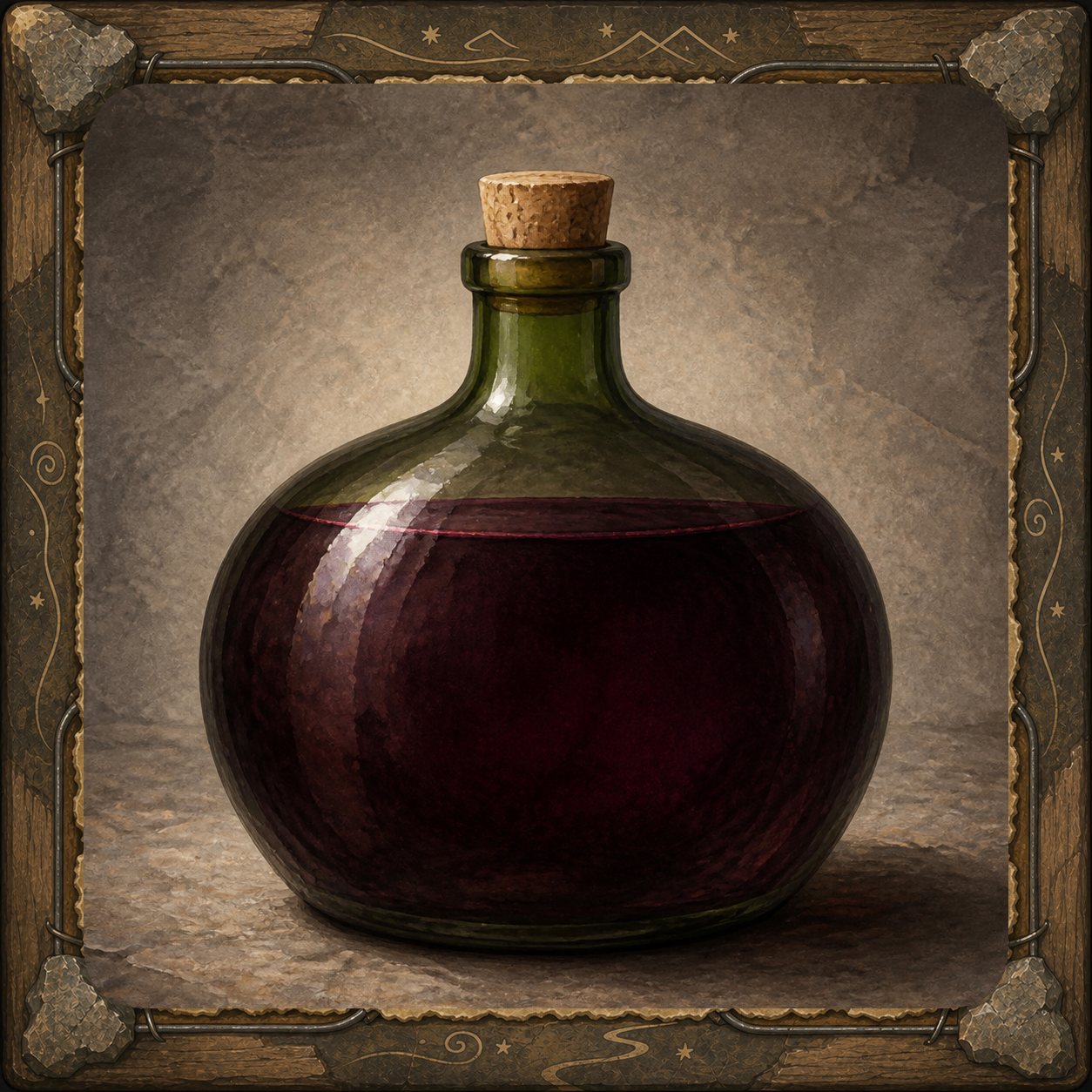
The wine resource card depicts a bottle. Its current storage calculation uses the barrel container category.
Wine uses 1.10 capacity per unit. The barrel factor, 0.80, is multiplied by a cool-storage factor of 1.25 and a food-separation factor of 1.10. A quantity of 100 occupies 110, so it cannot fit into the same free space as 100 wheat.
This is an abstraction of storage requirements. It does not mean that the game automatically arranges individual barrels on shelves or simulates installing cooling equipment through this coefficient alone.
Ore carries a dust-separation allowance
The copper ore resource card. Its storage profile includes a dust-separation classification.
Copper ore combines a bulk-container factor of 1.00 with a dust-separation factor of 1.15. One unit occupies 1.15, and 100 occupies 115. The current values make the contrast easy to see.
| Resource | Capacity per unit | Capacity for 100 |
|---|---|---|
| Wheat | 0.605 | 60.5 |
| Wine | 1.10 | 110 |
| Copper ore | 1.15 | 115 |
These factors are used by actual inventory logic. When a facility's output is transferred into a private warehouse, the transfer code adds its increase in occupied space to the resources and equipment already stored there. If that exceeds the warehouse's nominal capacity, it refuses the transfer.
Producing more therefore brings another question: what will you store, and how much room will it need? In a simple example, 100 each of wheat, wine, and copper ore requires 285.5 capacity for those resources alone. Special cold-storage or culture-container lots can use their own storage profiles, so this example does not describe every inventory case.
A possible next improvement is to show quantity and occupied capacity side by side, making the resources that consume the most room easier to identify. That is an interface improvement idea, not a newly implemented comparison screen. The coefficients are development values and may change during balancing.
For the production side of food reserves, read #56 on food balance. Thinking about space before goods arrive turns a warehouse from a box of numbers into part of the country's everyday life.
Visit the downloads page to check the currently available content and development status.