
DEVELOPMENT SNAPSHOT #62 — Beyond Wheat: Following Feed into Wool
- Thursday, October 22 2026
- Contributed by: Takeshi Miyaoka
- Views: 24
If a wheat harvest falls, is the dinner table the only thing affected? Ashwind Chronicle’s development data connects wheat to animal feed, then feed to wool. With three existing resource illustrations and a worked example of 100 wool, let’s follow the ingredients one step further.
Wheat has more than one destination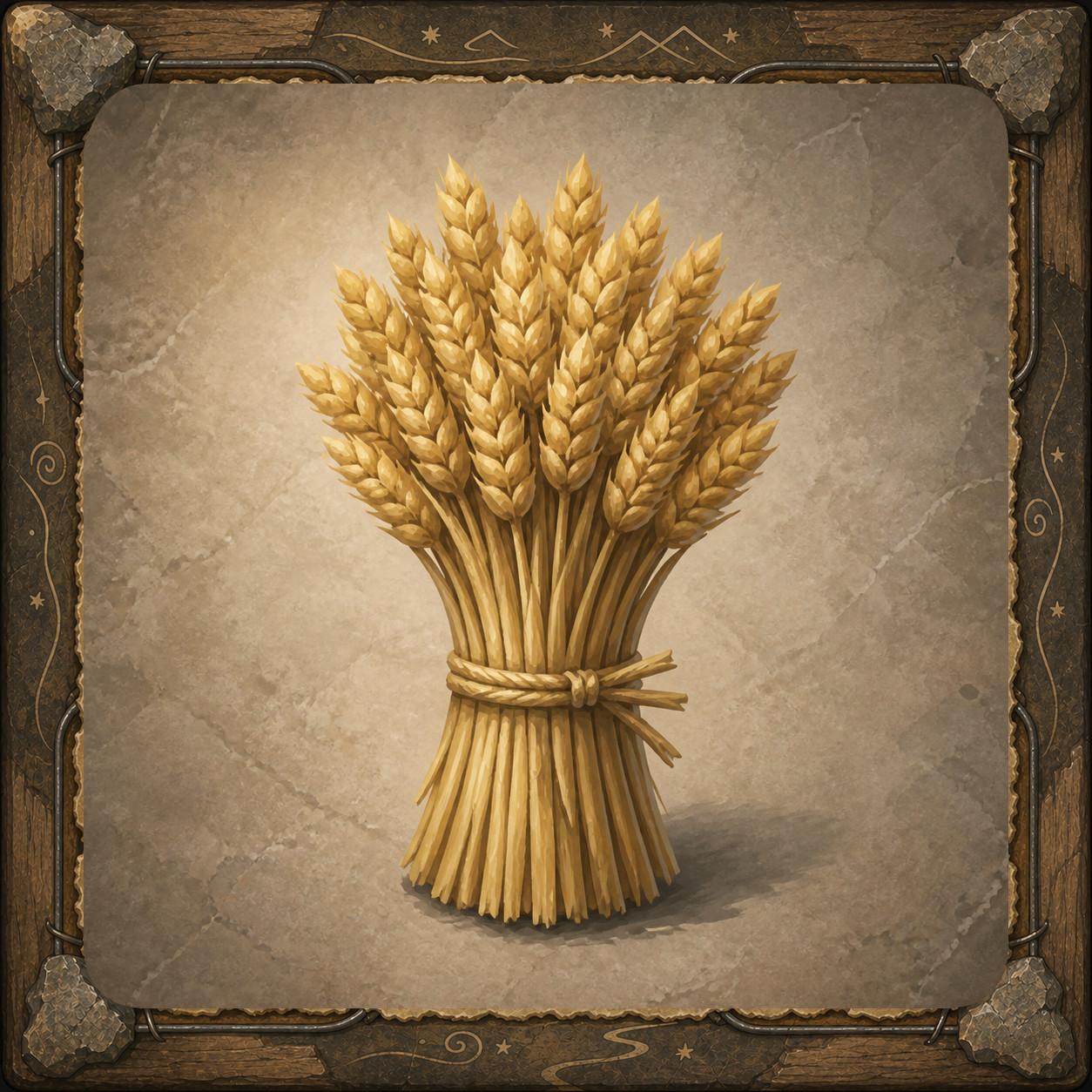
The game’s existing wheat resource illustration. These three images are game assets, not production-screen captures or newly added interfaces.
In the current resource master, wheat belongs to basic food and is also an ingredient for feed. Looking beyond direct consumption reveals another role for the same field: supplying a later production stage.
Feed is a small but important junction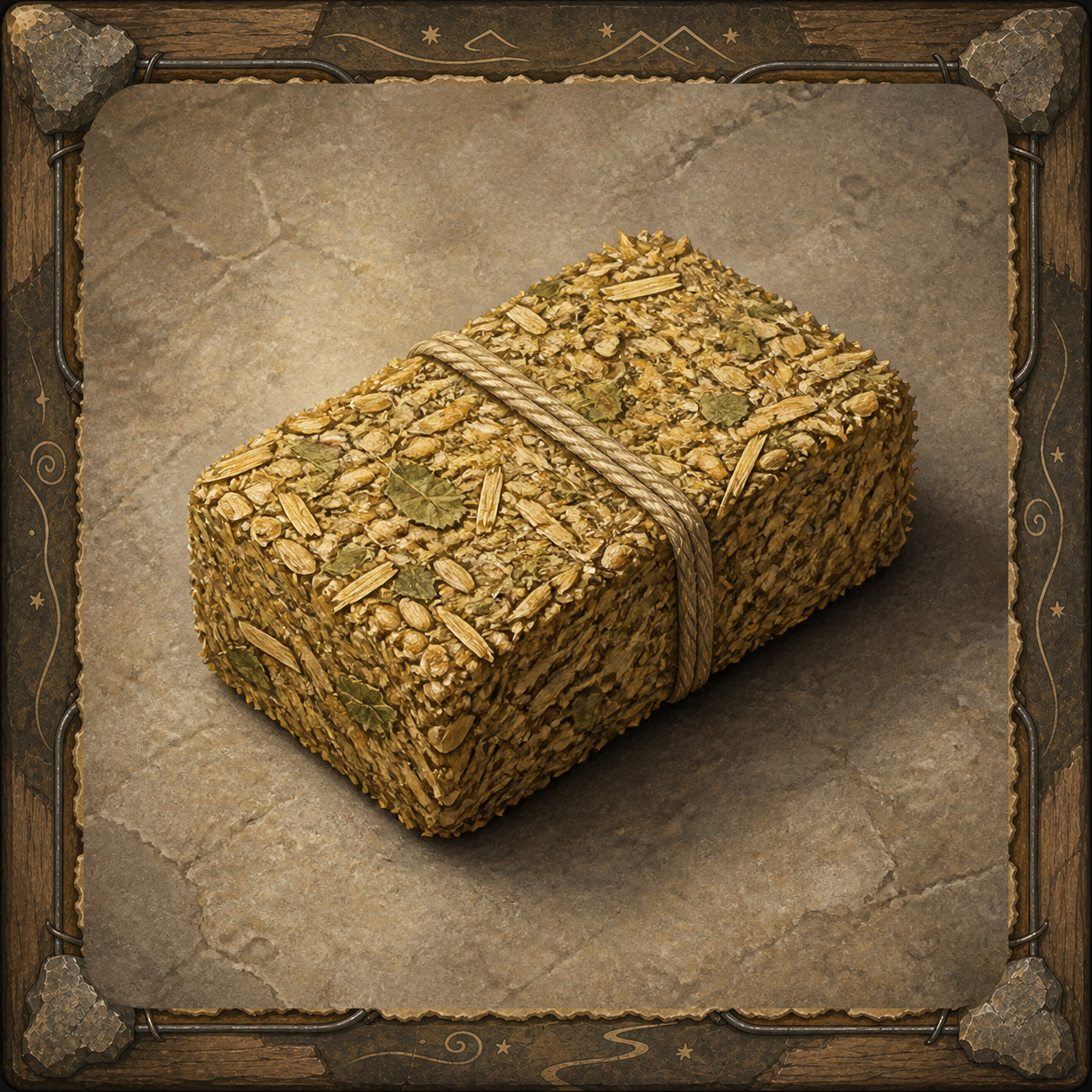
The feed resource illustration: an intermediate material connecting crops to livestock products.
The direct recipe for 1 feed specifies 0.25 wheat and 0.10 vegetables. For 20 feed, that becomes 5 wheat and 2 vegetables. These are calculations from the current recipe coefficients, not measurements of a day’s output in a running save.
More wheat alone is not the whole answer. Feed needs vegetables too. Checking both inputs can explain a shortage more clearly than looking only at the desired output.
What sits behind 100 wool?
The wool resource illustration. A connection that starts in a field reaches a textile material.
One wool directly requires 0.15 water and 0.20 feed. For 100 wool, the recipe therefore specifies 15 water and 20 feed. Trace that feed back one stage and the 5 wheat and 2 vegetables appear.
| Stage | Example output | Direct inputs at that stage |
|---|---|---|
| Feed production | 20 feed | 5 wheat and 2 vegetables |
| Wool production | 100 wool | 15 water and 20 feed |
These are separate production stages. Wool production does not consume the same wheat and vegetables again on top of its feed. Likewise, 15 water refers only to the wool stage; it is not the total water needed to grow the upstream crops.
An arrow does not mean instant conversionThe production code associates reserved inputs with an output. It also rejects using a lot produced today as an input for another production operation on that same day. This is not a claim that wheat turns into wool instantly within a single day. Stocks, facility capacity and available inputs also matter.
This snapshot checks current master data and production code. Coefficients remain development values; we have not newly measured the complete chain in a playthrough. Still, a field supporting livestock and then a useful material gives stockpiles and supply choices a tangible purpose.
For the harvest side, see #61 on disasters and harvests. For the space needed to keep goods, see #60 on warehouses.
Check the download page for currently available files and development status. If no build is available yet, follow the developer blog for further snapshots.